

Why Timers Matter: Building Executive Function Through Everyday Cooking
How a Simple Kitchen Tool Helps Kids Build Time Awareness and Independence

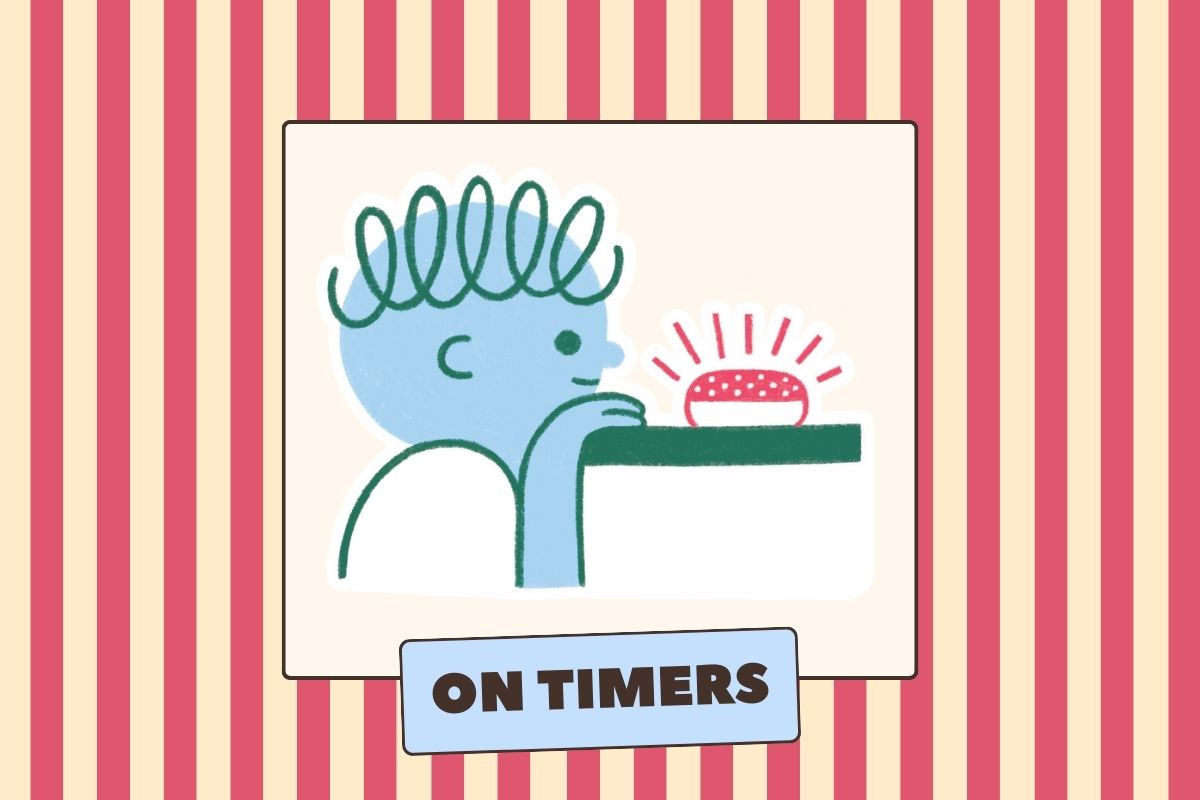
Professional chefs and seasoned home cooks sometimes skip timers because they’ve internalized other cues and learned to recognize sense indicators. Their brownies are ready not because the timer went off, but because the kitchen smells of warm chocolate and the top springs back when pressed. Their muffins are done when they have risen the right amount and are just starting to crack at the top. That’s expertise, but to get there, most of us need the timer first.
Timers are one of the simplest and most powerful learning tools in the kitchen. They tell us when something’s done or when to move to the next step, but they also help to develop executive function skills like time awareness, planning, and task management.
Timers act as a scaffold, an educational term defined as a temporary support that helps learners succeed while building a skill. As a learner becomes more competent, you can gradually remove the scaffold. In cooking, a timer provides structure as a budding cook learns the sensory cues through experience.
But timers do even more than support baking and cooking, they build time awareness — the internal sense of how long something takes. For many kids (and adults), this isn’t intuitive. Try estimating how long it takes to unload the dishwasher, then time it. How close were you? That sense of duration helps with everything from starting homework to avoiding procrastination. Kids don’t automatically know what “five minutes” feels like; none of us do. We learn it by experiencing five minutes of a task.
That’s why timers show up throughout Nibblings recipes. When I write, “Set a timer for two minutes and mix,” I’m prompting an action (mix for two minutes), not just marking a duration. It’s a small, structured routine that reinforces executive functioning. Time awareness supports planning, prioritizing, and task initiation in every part of life. When kids start to estimate time in the kitchen (“It takes about ten minutes to get my cake into the oven”), they’re strengthening the same skill that helps them manage homework or get ready for school. Learning to sense how long things take helps kids plan, transition smoothly, and approach tasks with more confidence. As we all know, these skills matter as much for daily routines as they do for baking a pie.

How to Use Timers
1. Use voice-activated timers.
They make it easy to set multiple timers hands-free so you don’t need to dry your hands or step away from your task. If you don’t have a voice assistant, let your kid use your phone with voice commands. Decreasing friction makes it easier for kids to use timers consistently.
2. Name your timers.
When using voice-activated timers, label them: “Alexa, set pasta timer for ten minutes.” Insert, cookie timer, sauce timer, clean-up timer, etc. Naming helps to manage multiple timers and remember what each one corresponds to.
3. Time everything.
Whether it’s 30 seconds or an hour, make setting a timer part of the cooking rhythm. Over time, kids start to internalize how long different intervals feel and what they can accomplish. That’s the foundation of time management.
Try It Out
Practice this with the 5-Step Cleaning Prep from Nibblings. The first step? Set a timer for five minutes. Cleaning for five minutes feels manageable; “clean the kitchen” feels endless. The timer helps kids see what can be done in a defined period—an executive function skill that extends far beyond the kitchen.
Give it a try, and notice how much can happen in those five minutes and then start timing everything else!
So helpful!!!!
love this framing!