

Executive Function: Why Cooking Is the Perfect Place to Practice
Understanding the skills behind everyday tasks and how to strengthen them in the kitchen

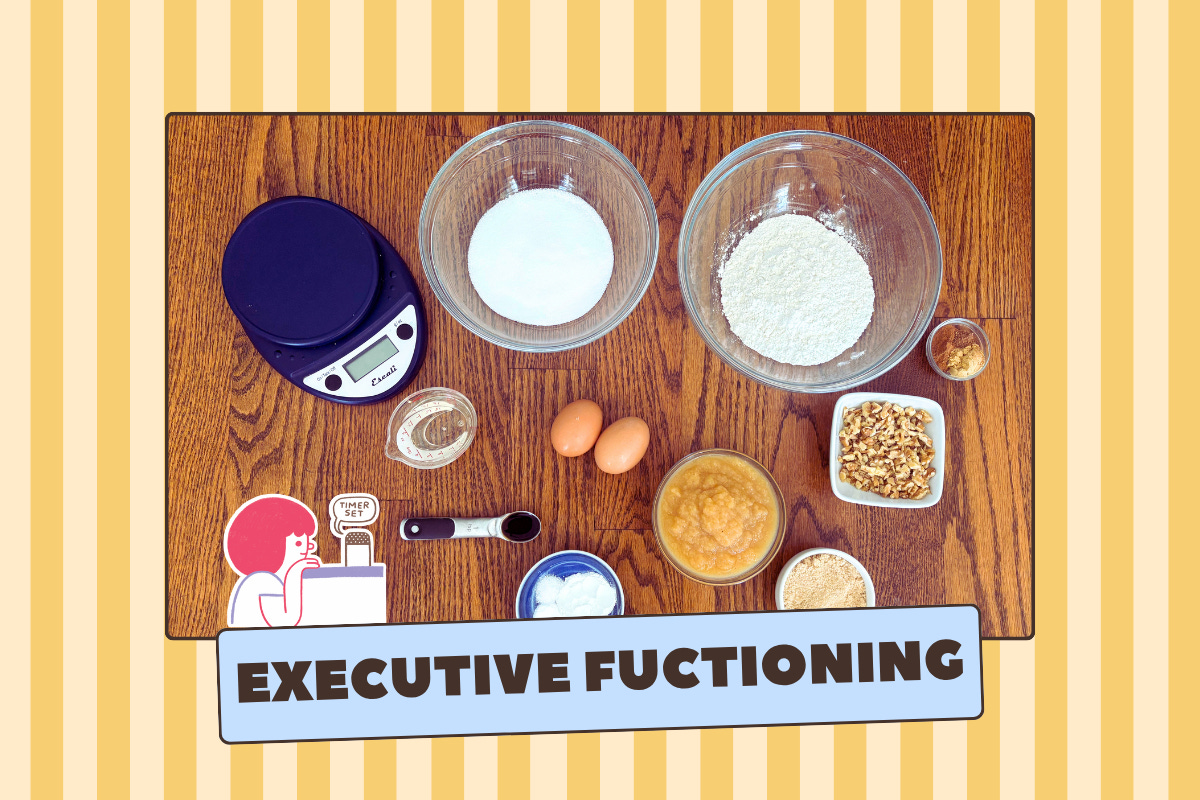
Executive functioning is having a moment. As more kids and adults are diagnosed with ADHD, the term has entered everyday conversation. More people are recognizing that they struggle with these skills too. And the truth is, we could all improve our executive functioning.
This article is for both you and your kid. Because these are skills we are all working on.

What Is Executive Function?
Executive functioning is the set of processes and skills we use to plan and manage our tasks and responsibilities. It’s what gets us through our morning routine, helps us complete tasks at work, and allows us to serve a finished meal at the end of the day.
It includes things like planning, managing time, prioritizing, getting started, and following through. Some of us are stronger in certain areas than others. Many of us rely on coping strategies to support weaker areas. And all of us have the ability to strengthen these skills.
We can all benefit from becoming more aware of how these skills show up in our lives—not in service of optimizing productivity, but so that life feels more manageable. So we feel less overwhelmed. So we experience less frustration or shame when things that seem “simple” turn out to require real effort.
Because the truth is, even simple tasks require a lot of invisible work.
I’ve spent over a decade working in education, in classrooms, writing curriculum, and working privately as an executive functioning coach. In that time, I’ve worked closely with kids and adults with ADHD, including within my own family, and have spent years thinking about how these skills develop and how we can support them.
I also happen to have strong executive functioning skills myself. I don’t often forget things, I tend to stay on top of deadlines, and I’m someone who plans ahead.
And even with that, I’ve come to see just how much invisible work is required to make this happen.
Across all of these experiences, one thing has become very clear to me: cooking is one of the most natural and powerful ways to both reveal and strengthen executive functioning skills. And, importantly, these are skills we can all develop.
Why the Kitchen?
There are many ways to develop executive functioning skills. I’m interested in the kitchen because cooking is a self-contained project that requires all of them at once.
When you cook, you are constantly making decisions. You are reading ahead, thinking about what comes next, checking the time, and adjusting when something doesn’t go as planned. You might be mixing something while also keeping an eye on the stove. You might realize halfway through that you forgot an ingredient and need to figure out what to do next.
All of that is executive functioning in action.
But there’s another reason the kitchen is such a powerful place to learn. Recipes themselves are written guides that support executive functioning. When someone writes a recipe, they are doing all of this thinking for you. They are deciding what needs to happen first, what can happen at the same time, how long each step should take, and where someone might get stuck.
That’s why recipes often begin with something like “preheat the oven” or gather your ingredients. Not because it’s exciting, but because it sets up everything that comes next. It’s planning and prioritization built into the structure.
As a recipe developer, I think about this constantly. I break tasks into manageable steps. I order them intentionally. I try to remove unnecessary friction so the cook can focus on the process.
In Nibblings recipes, this is even more explicit. Steps are broken down (chunked). Tasks are clear. The invisible work is made visible. That’s executive functioning, modeled on the page.
Executive Function in the Kitchen
Here are a few key executive functioning skills and how they show up while you cook.
Time Awareness
Time awareness is the ability to understand how long things take and to use that information to plan. Without it, we might start a recipe too late and rush through important steps, or run out of time entirely.
In the kitchen, this shows up constantly. You start mixing and think it will take a minute, but it actually takes five. The cookies need ten minutes in the oven, but those ten minutes feel longer or shorter depending on how closely you’re paying attention.
Cooking gives you a natural way to practice this skill. You can notice when you start, estimate how long something will take, set timers, and then reflect on what actually happened. Over time, you begin to build a more accurate sense of time, a necessary skill for managing your life.
Task Initiation
Task initiation is the ability to get started. For many people, this is the hardest part. A task can feel too big, too boring, or too overwhelming. Usually, if you’re having trouble getting started, the first step is too big.
Recipes model this skill beautifully. You don’t start by “making cookies” or even “mixing batter.” You start by preheating the oven. Then you gather ingredients. Then you measure flour. Each step is small and manageable.
As you move through the process, you gain momentum. And once you’re in it, it often feels easier to keep going. You start with a clear deliverable and move on from there.
Planning and Prioritization
Planning and prioritization are about deciding what to do first, what comes next, and what matters most.
A recipe gives you this structure in the kitchen. You can see the sequence laid out in front of you. You can notice why certain steps come before others. You can start to anticipate what will make things easier later.
When you read a recipe before you begin, you are practicing planning. When you decide to prep ingredients ahead of time, you are prioritizing. These are the same skills we use in school, work, and to manage our lives.
Working Memory and Multitasking
Working memory is the ability to hold in our minds and manage multiple pieces of information at once. In cooking, this might look like remembering what step you’re on while thinking about what comes next.
Cooking often asks us to juggle multiple things at once. But recipes are written down. You can reread them. You can pause, check, and continue. You don’t have to hold everything in your head. Instead, you learn to use tools that support your thinking and memory. You can say steps out loud, pause to check instructions, or write things down if needed. That’s not a workaround, that’s the skill and it’s not much different from writing down your to do list and checking back on it throughout the day.
For You and Your Kid
Kids’ executive functioning benefits from explicit instruction and repeated practice. Adults’ executive functioning benefits from awareness.
When you start to notice where things feel hard—whether it is getting started, managing time, or keeping track of steps—you can begin to adjust how you approach tasks.
Cooking gives you a place to do that in a concrete, repeatable way.
It also gives kids something equally important: The experience of working through a process, sticking with it, and finishing something real.
The Bigger Picture
There are many ways to strengthen these skills. But cooking brings them all together in one place.
So when you step into the kitchen, you’re not just making food. You’re practicing how to plan, start, persist, adjust, and complete something from beginning to end.
Why not strengthen those skills while also making something delicious?
Try it with a Nibblings recipe. Each one is intentionally designed to make these skills visible and doable.
Learn to cook. Cook to learn.
Could not agree more!! Food is such a fundamental way that we can spend time as a family, learn about the world, and gain confidence in our abilities. Love what you're doing here. 🤍