Why Cleaning Up Belongs in the Recipe
Supporting kids in developing the executive functioning skills to clean up after themselves

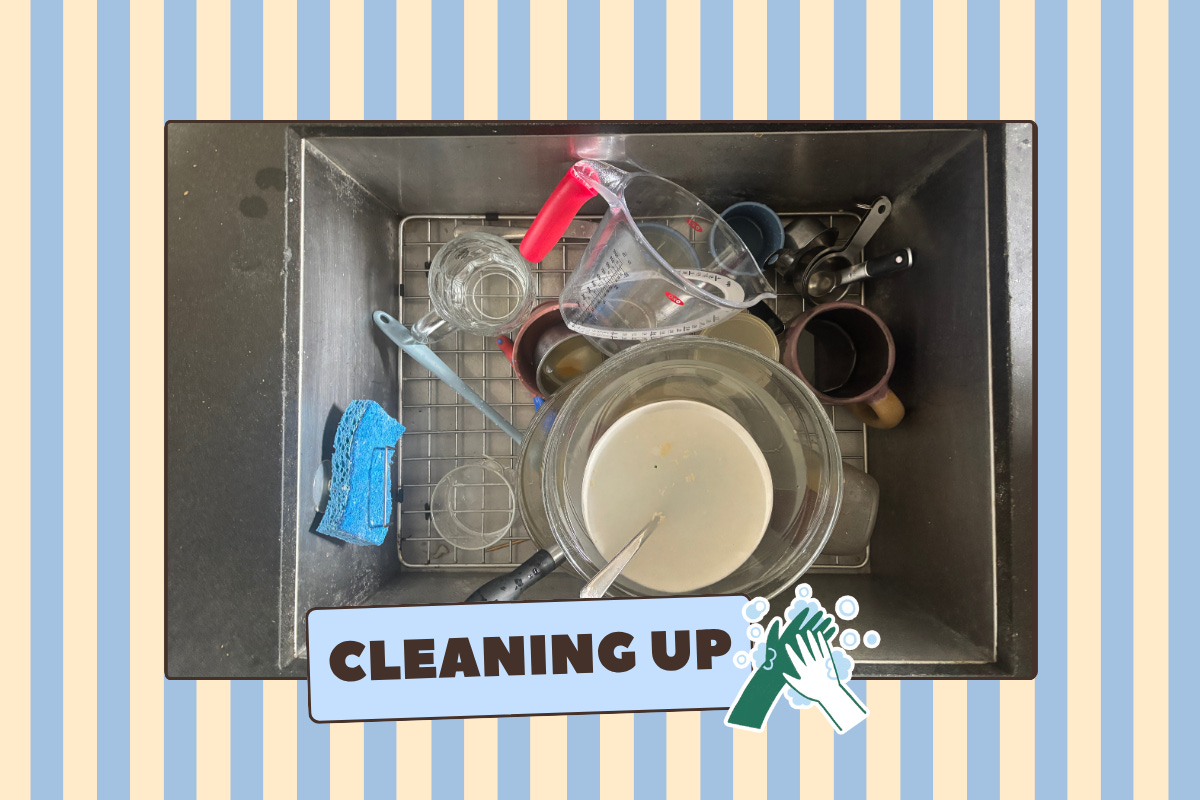
After your kid finishes cooking, your kitchen will probably look like a tornado blew through it. (It happens to me when I cook, too.) Cleaning up can be surprisingly hard — for kids and adults. It’s rarely about laziness; it’s about not knowing where to start, wondering if it will ever end, and dreading the boredom of what’s ahead. Overcoming all of these challenges requires strong executive functioning skills and a few solid strategies.
Cleaning demands a lot of mental organization. You have to look at a messy space, decide what to tackle first, hold that plan in your head, and stay on task until it’s done. For kids (and honestly, for most of us), that can feel overwhelming.

The Skills at Work
Cleaning is a manifestation of executive functioning — the set of cognitive skills that help us plan, organize, and follow through on a task.
To successfully clean a space, kids need to use skills like:
Task initiation: Getting started even when they don’t feel like it.
Breaking tasks down: Noticing the many small tasks that need to get done in service of the larger goal and handling them one at a time.
Sustained attention: Sticking with something (especially something boring) until it’s done.
Time awareness: Understanding how long a task might take.
These skills don’t just help in the kitchen, they carry over to all aspects of life.
Strategies to Support Kids (and Yourself!)
Once you understand what makes cleaning hard, it’s easier to help your kid — and yourself — approach it with more success. Here are two strategies that make cleanup smoother while building those key executive functioning skills.
1. Give clear, specific directions.
Instead of saying, “Clean the kitchen,” start with something actionable and small: “Put all the dirty dishes from the counter into the sink.” Breaking the task down in this way transforms the task from something overwhelming to manageable. Your kid may need you to continue to break down tasks and check in, or they may be able to move forward independently once they have started. It’s a skill they will keep working on and building so more support in the beginning is okay!
2. Use a timer.
Cleaning feels more manageable with an end in sight. Many kids (and adults) overestimate how long a cleanup will take — assuming it’s a 30-minute ordeal when it might actually be five or ten. Try saying: “Let’s agree to clean for five minutes and see how far we get.” Then, set a timer and get moving! This builds focus and adds a sense of urgency, while making the task less daunting. You can always add a few extra minutes if they’re on a roll, or stop when the timer goes off.
A Simple 5-Step Clean-Up Routine
To make things even easier, here’s a five-step checklist you can use at the end of any Nibblings recipe or other kitchen project. The steps are short and specific so kids can stay on track and know when they’re done. Print it out and hang it on the fridge for easy reference!
Timer for 5 minutes
Food in fridge
Garbage tossed
Dishes to the sink
Utensils in dishwasher
You’ll also notice that many Nibblings recipes include a mid-cook cleanup — quick, clear steps that help kids build habits of tidiness, ownership, and responsibility while they cook.
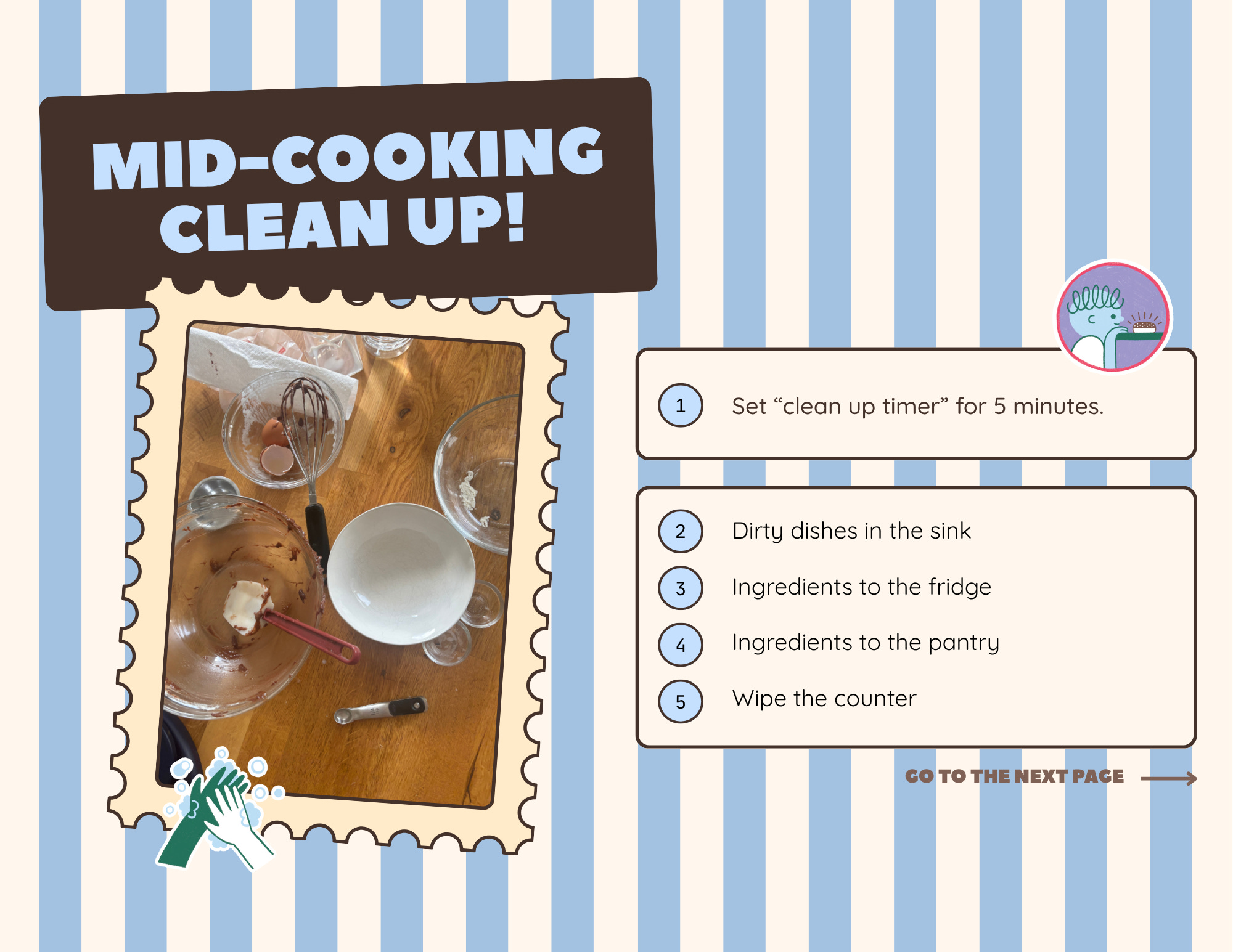
Just like cooking, cleaning is a skill that takes practice. When kids know what to do and how to start, they develop independence in the kitchen and confidence in their ability to manage bigger, more complex tasks.